


17
AprCommon‑Law Partnership Sponsorship: Avoid Rejection in 2026
Common law partnership sponsorship is Canada’s family-class pathway that lets a citizen or permanent resident sponsor a partner they’ve lived with for at least 12 continuous months in a marriage-like relationship. It requires proof of cohabitation, complete IRCC forms, medicals, biometrics, and admissibility checks. Done right, it leads to permanent residence and, for inland cases, an open work permit option.
By Kapil Rathod, Principal Lawyer, Rathod Law Firm — Last updated: April 17, 2026
Start Here: Your 2026 Sponsorship Game Plan
Start by confirming you meet the common-law test (12+ months of continuous cohabitation), then map your monthly proof, choose inland vs. outland, and complete IRCC forms with consistent dates. A clean timeline, strong evidence, and fast responses to requests keep your file on track.
- What you’ll learn:
- Eligibility rules for common law partnership sponsorship
- How to organize 12+ months of cohabitation proof
- Inland vs. outland strategy and Open Work Permit options
- Forms, medicals, biometrics, and background checks
- Refusal risk factors and how to fix them
- Table of contents:
- Summary
- What Is Common-Law Sponsorship?
- Why It Matters
- How the Process Works in 2026
- Types, Streams, and Smart Choices
- Eligibility & Proof
- Forms and Documents Checklist
- Best Practices to Avoid Refusals
- Timelines, Status, and What to Expect
- Red Flags and Complex Scenarios
- Tools and Resources We Rely On
- Case Studies: How Strategy Changed Outcomes
- Frequently Asked Questions
- Key Takeaways
- Conclusion
Summary
Common-law partnership sponsorship grants permanent residence to partners who have lived together for at least 12 months in a marriage-like relationship. Success hinges on clear proof of cohabitation, complete forms, and consistent evidence across documents and timelines. Inland applicants can often apply for an open work permit while IRCC processes the file.
- Who qualifies: Partners 18+ who cohabited for 12+ continuous months and meet admissibility.
- Proof that matters: Joint lease, bills, bank accounts, tax filings, mail to same address, photos, travel, declarations.
- Where to apply: Inside Canada (inland) or outside (outland) depending on status and travel needs.
- Key forms: IMM 1344, IMM 5532, IMM 5669, medical exam, biometrics, police certificates.
- Processing: Measured in months; timelines depend on stream, country history, security checks.
- Avoid refusals: Keep a clean timeline, explain gaps, and label evidence clearly (12+ months).
- Professional help: Representative review reduces omissions and addresses red flags proactively.
Quick Answer
Common law partnership sponsorship lets Canadians sponsor a partner after 12+ months of cohabitation. From our office at 106-2250 Bovaird Drive East in Ontario, Rathod Law Firm helps prepare evidence, forms, and explanations so family sponsorships meet IRCC standards and avoid delays.
What Is Common-Law Sponsorship?
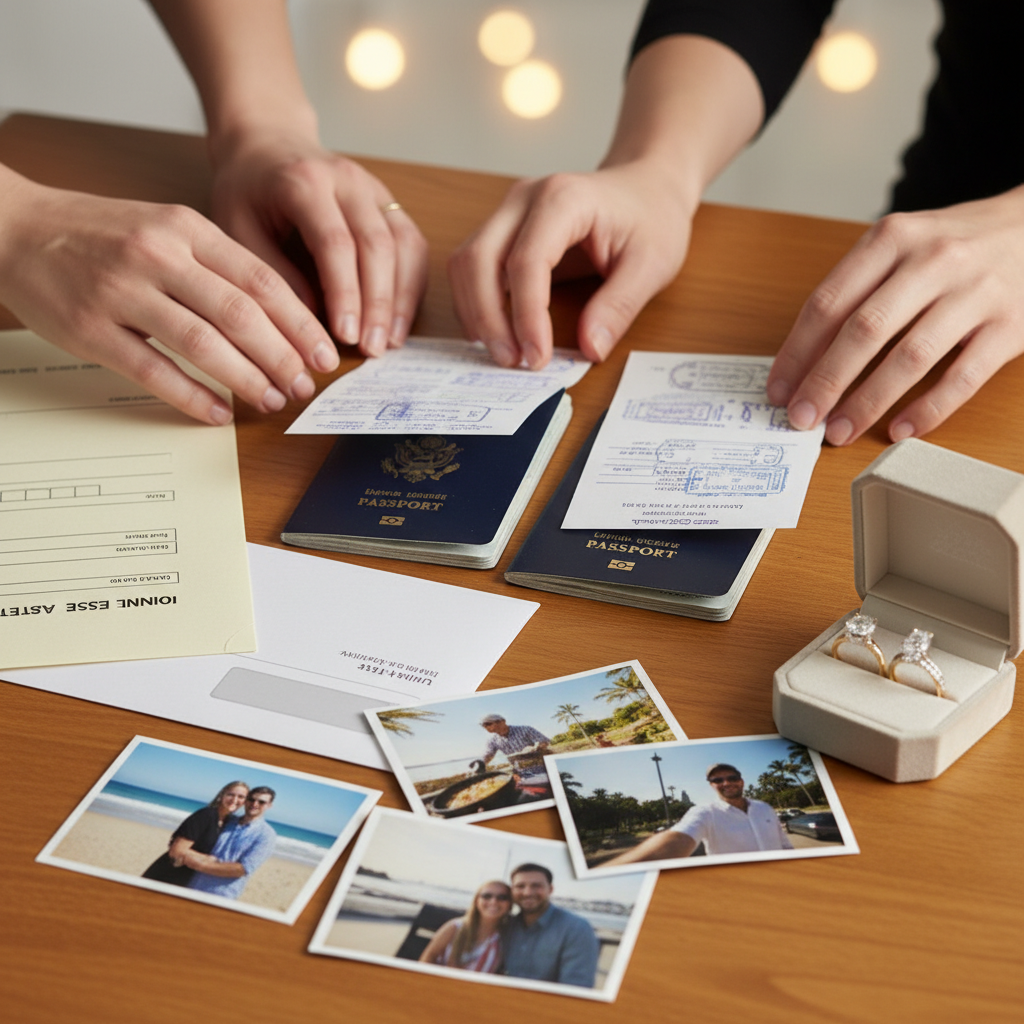
Common-law sponsorship is a Canadian family-class route where a citizen or permanent resident sponsors a partner after 12 continuous months of cohabitation in a marriage-like relationship. IRCC evaluates genuineness, cohabitation, and admissibility using forms, background checks, and documented proof across at least a one-year period.
Here’s the concept in clear terms.
- Definition: A committed, marriage-like relationship with 12+ months of continuous cohabitation.
- Legal basis: Treated similarly to spouses under the family class, with distinct proof of cohabitation.
- Who can sponsor: Canadian citizens and permanent residents aged 18+ who meet undertaking obligations.
- Outcomes: Permanent residence for the sponsored partner when the application is approved.
- Inland benefit: Many inland cases pair PR with an Open Work Permit application to maintain income and status.
- Evidence horizon: Strong files show continuity across the entire 12-month period, not just a few highlight months.
In our experience supporting clients across Brampton and the GTA, the clearest files keep officers from “guessing” about timelines. When the story is easy to follow, reviews move faster.
Why Common-Law Sponsorship Matters
Common-law sponsorship keeps partners together in Canada by recognizing marriage-like relationships with a year of cohabitation. It protects families facing expiring status or travel limits and offers inland applicants a pathway to work while their permanent residence is processed.
- Family unity: Couples avoid long separations and can build stable lives in Ontario and across Canada.
- Status stability: Inland sponsors can seek an OWP to work lawfully during processing.
- Real-world relief: Couples with expiring study or work permits can bridge status through sponsorship + OWP.
- Community roots: Local leases, bank accounts, and employment cement ties that IRCC recognizes.
- Predictability: A structured submission with month-by-month proof reduces fairness letters and interview risk.
Here’s the thing: stability matters. When work authorization and residence are secure, couples can focus on careers, school, and community—not paperwork emergencies.
How the Process Works in 2026
The best approach is a staged process: confirm eligibility, gather 12+ months of cohabitation proof, complete IRCC forms, submit medicals and biometrics, and track the file through updates. Inland files may include an Open Work Permit. Clean timelines and clear explanations reduce fairness letters and refusals.
Step-by-step overview
- Check eligibility for sponsor and partner (age 18+, residency, admissibility, cohabitation).
- Map your 12-month timeline with addresses, leases, utilities, and key dates.
- Collect evidence from at least 8–12 categories that span the entire year.
- Complete forms (e.g., IMM 1344, IMM 5532, IMM 5669) and sign digitally or in ink as required.
- Book medicals with panel physicians and give biometrics when instructed.
- Submit package online and save a copy of every upload and receipt number.
- Respond within 30 days to any IRCC request or fairness letter with organized, labeled documents.
- Track processing and update material changes (moves, jobs, travel) promptly.
What most couples don’t realize
- Consistency beats volume: Ten aligned records can be better than fifty mismatched ones.
- Start early: Build your proof while you live together—not after you hit 12 months.
- Explain breaks: Short trips rarely break cohabitation when the home remains yours—just document it.
We’ve found that a pre-submission file audit catches 80% of the issues that trigger fairness letters. A one-hour check can save months of delay.
Types, Streams, and Smart Choices
Choose between inland (in Canada) and outland (outside Canada) based on travel needs, status, and risk tolerance. Common-law, married, and conjugal categories share core relationship tests but differ on required proof. Inland applicants often add an OWP; outland can help when travel is essential.
Inland vs. Outland
- Inland: Best when you live together in Canada and travel is limited; pairs well with OWP.
- Outland: Useful if the partner needs to travel or lives abroad; appeals handled outside Canada.
- Practical example: A Brampton couple with frequent cross-border work chose outland to avoid re-entry uncertainty while keeping cohabitation proof steady.
Common-law vs. Spouse vs. Conjugal
| Category | Core Requirement | Typical Proof | When It Fits |
|---|---|---|---|
| Common-law | 12+ months continuous cohabitation | Joint lease, utilities, bank, mail, photos | Couples living together, not married |
| Spouse | Legal marriage | Marriage cert., joint life integration | Married couples |
| Conjugal | Marriage-like bond without cohabitation due to barriers | Evidence of barrier + ongoing commitment | Legal/cultural barriers prevent cohabitation/marriage |
For many in Peel Region, common-law is the natural route when marriage timing is later or cultural ceremonies are pending. What matters is the evidence of a shared life, not labels.
Eligibility & Proof: Build an IRCC-Ready File
Eligibility turns on a genuine, exclusive relationship with 12 continuous months of cohabitation. Strong files show ongoing financial, residential, and social interdependence. Organize evidence month-by-month, label gaps, and add short explanations so officers can verify facts quickly.
- Identity & status: Passports, visas, entry stamps, and prior permits for the partner.
- Residence: Leases, property letters, landlord notes, mail addressed to both at the same address.
- Utilities: Hydro, internet, gas, phone—at least 6–12 bills spanning the year.
- Finances: Joint accounts, e-transfers, shared subscriptions, insurance naming one another.
- Taxes: Notices of assessment and benefits mail showing the same address.
- Photos: Labeled images from multiple months, places, and with friends/family.
- Travel: Boarding passes and eTickets showing trips taken together or to visit each other.
- Declarations: 2–3 sworn statements from people who know your relationship well.
- Messages: Select chats and call logs showing sustained communication over 12+ months.
- Life admin: Gym memberships, car insurance, emergency contacts, and beneficiary designations.
- Children (if any): Birth registrations, school letters, health cards listing both parents or same address.
- Insurance: Health, tenant, life, or auto policies listing each other as insured or beneficiary.
Consider this checklist your roadmap. When officers can verify each month at a glance, credibility rises—and questions fall.

Forms and Documents Checklist
Complete the sponsor and principal applicant forms, then attach identity, police, medical, and proof-of-relationship documents. Cross-check dates across forms and evidence. Use consistent address history, employment dates, and travel logs for at least a 10-year background period when forms ask for it.
- Sponsor forms: IMM 1344 (Application to Sponsor), undertaking, and relationship background.
- Relationship form: IMM 5532 (Relationship Information) with detailed cohabitation timeline.
- Background: IMM 5669 (Schedule A), 10-year history; explain any gaps over 1 month.
- Dependents: IMM 5406 (Additional Family Information), as applicable.
- Police certificates: Every country lived in for 6+ months since age 18.
- Medical exam: Panel physician eMedical receipt number.
- Biometrics: Attend within the IRCC window—often 30–90 days from notice.
- Translations: Certified translations and affidavit when documents aren’t in English or French.
- File index: Create a master index mapping each month to 2–3 documents (residence + finances).
When working with clients in Brampton, we often draft a short cover letter that walks officers through the index. It’s a simple step that pays dividends in review clarity.
Best Practices to Avoid Refusals
The best files tell a simple, consistent story: 12+ months together, clear cohabitation, and integrated life. Label evidence, reconcile dates, and provide short explanations for any breaks. Proactively address prior immigration history, status gaps, and overlapping addresses.
Pro tips we apply with clients
- Create a 12-month grid and place at least 2–3 documents per month covering residence and finances.
- Name files consistently: “2025-06 Hydro Bill – 123 Main St – Both Names.pdf.”
- Write a 1–2 page relationship narrative using subheadings for first meeting, cohabitation, and future plans.
- Anticipate red flags: Prior refusals, short dating history, or long-distance stints need extra corroboration.
- Explain gaps over 14 days (travel, renovations, caregiver duty) with tickets, invoices, or letters.
- Limit chat logs to 1–2 pages per quarter unless communication is your main proof.
- Don’t rely on photos alone—pair each set with dated bills or statements.
- Keep versions of every form and evidence index for easier updates.
- Respond inside 30 days to requests with labeled PDFs and a short cover letter.
- Use statutory declarations from roommates or landlords to confirm cohabitation when leases are informal.
- Include 3–5 categories of proof from the first and last month to show continuity.
- Cross-check addresses: Ensure the same street number appears on bank, tax, and utility records.
- Back up to the cloud and keep an offline copy—officers may ask for re-uploads.
- Have a reviewer (lawyer/paralegal) catch inconsistencies before submission.
Need a second set of eyes?
Book a focused document review to stress-test your evidence index, timeline, and forms before you submit.
Timelines, Status, and What to Expect
Expect multi-stage processing with medicals, biometrics, and background checks. Inland OWP approvals often arrive earlier than PR decisions. Keep your contact info current, monitor your account weekly, and plan for several months of processing depending on country history and security screening.
- Milestones: AOR, biometrics instruction letter, medical pass, eligibility review, background, decision made.
- OWP timing: Inland couples commonly see work authorization before PR—timelines vary.
- Requests: If IRCC needs more proof, respond within the stated window (often 30 days).
- Moves and jobs: Update addresses and employment within 10 days of changes.
- Travel caution: Outland is safer for frequent travelers; inland travel can risk re-entry.
- GCKey hygiene: Check messages weekly and download every notice for your records.
What most people don’t realize: even small address updates matter. A mismatch between bank statements and form history can trigger extra questions.
Red Flags and Complex Scenarios
Officers scrutinize short dating histories, status gaps, and mismatched timelines. Be proactive: add corroboration, explain breaks, and document how you combined finances. If you’ve had a prior refusal or CBSA issue, include a concise, factual explanation with supporting records.
- Short relationships: Use 12+ months of bills, leases, and shared finances to offset risk.
- Status gaps: Show timely applications, implied status periods, or restoration steps.
- Address conflicts: Resolve old bank addresses; add landlord letters or delivery records.
- Prior refusals: Provide refusal letters and explain how your new record fixes the concerns.
- Frequent travel: Keep boarding passes; explain any non-cohabitation periods over 14 days.
- Interviews: Prepare for basic timeline questions and how you split living expenses.
If a refusal occurs, options may include immigration appeals or judicial reviews. Our team regularly handles appeals and reviews, and we build the record with that possibility in mind from day one.
Tools and Resources We Rely On
Use official IRCC forms and checklists, panel physician networks, and GCKey/PR portals for submissions. Keep a shared folder, a monthly grid, and a master index of evidence. For statutory declarations and certified copies, engage a local notary for quick turnaround.
- IRCC application portal and GCKey for submissions and messages.
- Panel physician finder to schedule required medical exams.
- Police certificate instructions tailored to each country of residence.
- Cloud drive foldering by month; consistent file naming for quick retrieval.
- In-office notarization for affidavits and statutory declarations at our Bovaird Drive East location.
- Cover letter templates and evidence indexes to guide officers through your file.
We maintain checklists that mirror IRCC’s structure so nothing is missed. A mirror checklist makes it easier for officers to follow your package.
Case Studies: How Strategy Changed Outcomes
Effective sponsorship strategy pairs clean timelines with strong corroboration. In our experience, adding landlord letters, benefits mail, and bank statements across early and late months turns thin files into credible packages that meet IRCC’s evidentiary expectations.
- Student-to-OWP bridge (Ontario): Inland couple with an expiring study permit paired sponsorship + OWP and presented 18 months of utilities and bank records. A fairness letter was avoided because the timeline was airtight.
- No joint lease (GTA): Roommate affidavits, delivery records, and matching tax mail filled a 3-month documentation gap, demonstrating continuous cohabitation.
- Prior refusal abroad: Outland refile succeeded after we aligned address history and added 10 new financial records that showed deeper integration.
- Heavy travel for work: Outland filing with a cohabitation hub in Brampton plus boarding passes and employer letters minimized non-cohabitation concerns.
- Mixed chat platforms: Curated quarterly chat exports with date labels, paired with monthly bills, created a strong narrative without overloading the file.
Schedule a Sponsorship Planning Call
Get a 30–45 minute roadmap call to map your 12-month proof, choose inland vs. outland, and finalize your evidence index.
Local Tips
- Tip 1: If you’re visiting our Bovaird Drive East office, plan for weekday traffic on Airport Road and free up 45–60 minutes for document review.
- Tip 2: Winter in Peel Region can delay mail. Build 2–3 extra weeks into timelines for police checks and originals.
- Tip 3: For quick affidavits and certified copies, use our in-office notary so your package stays complete and consistent.
IMPORTANT: Bring original IDs and any leases or utility bills with both names for same-day photocopying.
Frequently Asked Questions
These answers cover the most common issues couples face: eligibility, travel, work permits, and thin evidence. Each response is concise and actionable so you can move your file forward without guesswork or delays.
- How do we prove 12 months if we had a 3-week trip? Keep boarding passes and show bills before and after. Add a short letter. Trips under 30 days rarely break cohabitation when the home remained yours.
- Can we apply inland if my visitor status expires soon? Often yes, but get legal advice. Pair sponsorship with an OWP and submit before your status lapses to preserve options.
- What if our chats are on different apps? Export small samples from each app—1–2 pages per quarter—and label dates clearly.
- Do we need joint bank accounts? Not mandatory, but shared finances help. Combine bank evidence with utilities, tax mail, and insurance.
- Should we marry instead? Marriage can simplify proof but isn’t required. Choose what’s genuine; IRCC values consistency over labels.
Key Takeaways
Document cohabitation month-by-month, reconcile dates across forms, and answer IRCC requests within 30 days. Choose inland + OWP for stability or outland for travel flexibility. A structured, well-indexed package consistently outperforms last-minute uploads.
- 12+ months together is the baseline; show early and late-month proof.
- Use 8–12 categories of evidence across the whole timeline.
- Keep a master index and consistent file names.
- Respond in 30 days with labeled PDFs and a brief cover letter.
- Ask for review if you’ve had prior refusals or address inconsistencies.
Conclusion
The strongest common law partnership sponsorships are built, not rushed. Map your year, gather multi-source proof, and tell a consistent story. If you need help aligning timelines, declarations, and forms, our Brampton-based team is ready to guide your submission from first draft to decision.
- Plan your 12-month grid and collect 2–3 proofs per month.
- Decide on inland + OWP vs. outland based on travel and status.
- Organize evidence and forms; add short explanations for gaps.
- Get a professional review to reduce risk and delay.