
05
JulTraffic Ticket Lawyer: Cut Fines and Stress in 2026
A lawyer for traffic tickets is a legal professional who contests provincial driving offenses, negotiates with prosecutors, and protects your record. In Ontario, timely action—often within 15 days of a ticket—is critical. Skilled counsel can reduce penalties, avoid demerit points, and lower insurance risk so you can move forward confidently.
By Kapil Rathod — Principal Lawyer, Rathod Law Firm
Last updated: July 5, 2026
Above-the-Fold: Why This Guide + Table of Contents
This complete guide shows how a traffic ticket lawyer analyzes your case, challenges evidence, and steers you through Ontario’s Provincial Offences process. Use it to understand options, protect your license, and decide when to retain counsel, especially for speeding, red-light, stunt driving, and suspended license matters.
If you were just stopped or found a ticket on your windshield, you need clear steps—not legal jargon. This practical, Ontario-focused playbook from Rathod Law Firm explains what to do next and when professional help pays off.
- What a traffic ticket lawyer actually does
- Ontario’s process, deadlines, and disclosure
- Defense strategies for common charges
- When paralegal services make sense
- How tickets affect demerit points and insurance
- Local tips near Professor's Lake Park and Empire College Canada
What Is a Traffic Ticket Lawyer?
A traffic ticket lawyer defends drivers against provincial offenses like speeding, red-light, stunt driving, or suspended license charges. They examine evidence, seek disclosure, cross-examine witnesses, negotiate resolutions, and run trials to protect your driving record, reduce penalties, or secure dismissals where available.
At Rathod Law Firm in Ontario, traffic defense is part of our integrated practice. We pair lawyer advocacy with licensed paralegal support for efficient case handling. That structure helps with routine tickets and complex charges that risk license suspension or heavy penalties.
- Scope of work: Early assessment, filing responses within deadlines, disclosure review, Charter and evidentiary motions, negotiations, and trial representation.
- Why it matters: Even a single conviction can raise insurance risk; strategic defense aims to avoid or minimize that impact.
- Real example: For a highway speeding stop, we analyze radar/lidar calibration records, officer notes, traffic conditions, and signage to test reliability and fairness.
Because every fact pattern is unique, the best results come from tailored strategies—not one-size-fits-all templates. That’s where experienced judgment makes the difference.
Why Hiring a Traffic Ticket Lawyer Matters
Hiring a traffic ticket lawyer improves outcomes by spotting disclosure gaps, testing officer observations, and negotiating focused resolutions. Counsel also prevents deadline mistakes that lock in convictions, especially when you have 15 days to choose an option after receiving a ticket.
Here’s the thing: most drivers focus on fines and forget record consequences. We’ve seen minor-looking tickets cause ripple effects on employment, insurance, and travel plans. A targeted defense can keep points off, prevent a license suspension, or secure a non-reportable resolution when available.
- Procedural protection: Missing a response deadline can trigger a conviction in your absence; counsel keeps the file on track.
- Evidence scrutiny: Calibration logs, officer memory, weather, traffic flow, and lane visibility are all testable components.
- Resolution leverage: Clean driving history, remedial steps (e.g., safe-driving courses), or evidentiary gaps may support better outcomes.
- Court presence: We appear so you often don’t need to, saving time away from work or family.
When your license or livelihood is on the line, experience and process discipline matter more than anything.
How Traffic Ticket Defense Works in Ontario
Ontario defense starts by responding to the ticket on time, requesting disclosure, and reviewing evidence for errors or reasonable doubt. Your representative negotiates with the prosecutor, files motions where warranted, and either resolves the matter or proceeds to trial with a documented strategy.
In our experience, clarity and speed produce better results. We map each file to the same reliable stages, adapting tactics to the facts and court location.
| Stage | What Happens | Your Action | Typical Timeline |
|---|---|---|---|
| Ticket Issued | You receive a ticket or summons. | Contact us promptly; preserve details. | Day 0 |
| Response Filed | We elect the option and file with the court. | Share license, ticket, and background. | Within about 15 days |
| Disclosure Request | We request officer notes, device records, video. | Review with us for accuracy. | Soon after filing |
| Pretrial/Resolution | We negotiate, raise issues, or schedule trial. | Approve strategy. | Varies by court |
| Hearing/Trial | We cross-examine and argue the law. | Attend if required. | Set by court |
| Outcome | Withdrawal, amendment, or decision. | Follow next steps. | Immediate or shortly after |
- Key timeline: Many tickets require a decision within 15 days; don’t wait.
- Disclosure focus: We look for calibration gaps, missing training records, or inconsistencies in officer notes.
- Proceed or resolve: Where evidence is weak, trial may be strategic; where appropriate, a negotiated amendment can reduce risk.
The path is straightforward when you know each step and the common pitfalls to avoid.
Types of Ontario Traffic Offenses We Handle
We defend speeding, red-light, stop-sign, handheld device, careless, stunt driving, and suspended license charges. Each category has different proof requirements, potential demerit points, and insurance exposure, so the defense must fit the alleged conduct and the evidence available.
Rathod Law Firm covers routine tickets and high-stakes charges across Ontario. Below are common categories and what we examine.
- Speeding: Radar/lidar calibration, operator training, line of sight, multi-vehicle interference, and signage.
- Red-light: Camera versus officer-issued; camera infractions are owner-based and typically carry no demerit points.
- Stop-sign or yield: Visibility, stop-line placement, obstruction, and officer vantage point.
- Handheld device: Observation angle, lighting, device handling versus actual use, and corroboration.
- Careless driving: Fact-intensive; we gather witness accounts, dashcam video, and scene context.
- Stunt driving/racing: Speed thresholds, pacing methods, and immediate roadside consequences, including vehicle impoundment.
- Suspended license: Notice, administrative error potential, and any underlying suspension source.
Consequences vary, but a consistent theme remains: evidence quality and procedure drive outcomes. A precise challenge often changes the result.
Demerit Points, Records, and Insurance
Tickets can affect demerit points, your driving record, and insurance risk. Some owner-liability offenses don’t add points, while moving violations and convictions can be reportable. The best strategy is avoiding a recordable conviction through targeted defense or suitable amendments.
Drivers often ask how a conviction will influence premiums. While insurers make their own decisions, avoiding reportable outcomes usually keeps risk lower. Owner-liability camera tickets generally don’t carry points, while handheld device and speeding convictions can be reportable.
- Driving record: Many employers and insurers rely on it; keeping it clean protects opportunities.
- Mitigation: Defensive-driving courses or documented behavior changes can support resolution discussions.
- Insurance context: For practical ideas about managing premium risk, some drivers review tips to reduce auto insurance in Ontario.
When we negotiate, we focus on outcomes that minimize both immediate penalties and longer-term record exposure.

Best Practices When You’re Stopped or Ticketed
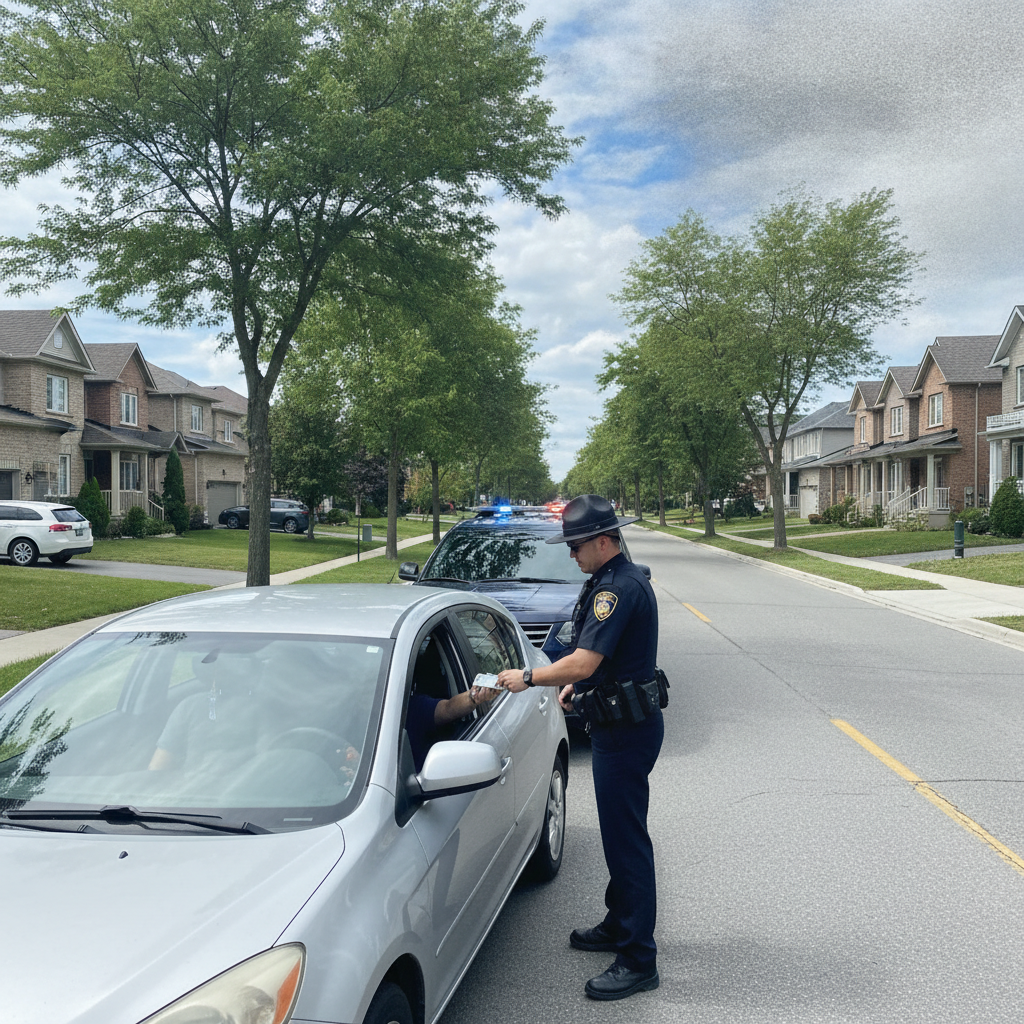
Stay calm, be polite, and avoid arguing roadside. Collect accurate details, note conditions, and do not admit fault. After the stop, record everything while fresh, then contact a representative quickly to preserve defenses and meet response deadlines.
- During the stop: Keep hands visible, provide license and documents, and avoid volunteering explanations.
- Right after: Photograph the scene if safe, note traffic, weather, and visibility, and save dashcam footage.
- Do not delay: Time limits apply. Early legal review can shape negotiations and trial readiness.
- Paperwork discipline: Store your ticket, disclosure, and correspondence in one folder or shared drive.
Good documentation wins cases. What you capture in the first 24 hours often becomes the backbone of your defense.
Paralegal or Lawyer? Choosing the Right Representative
For routine tickets, a licensed paralegal can be a cost-effective advocate; for complex or high-risk cases, a lawyer’s training in evidence and Charter issues may be critical. A blended team gives you both efficiency and depth where the facts demand it.
At Rathod Law Firm, we balance files between our principal lawyer and in-house licensed paralegal. That lets us scale effort: routine disclosure review flows quickly, while contested hearings get full legal analysis and advocacy.
- When paralegal support fits: Discrete speeding, stop-sign, and many handheld cases with clean records.
- When to prefer a lawyer: Stunt driving, suspended license, multi-vehicle collisions, or complex evidentiary disputes.
- Hybrid advantage: Cost-effective preparation plus courtroom experience where it counts.
- General legal guidance: Some readers also consult broad Ontario legal guidance before choosing representation.
The right mix depends on your stakes, evidence strength, and personal tolerance for risk.
How We Build Your Defense: Our Method
We map each case to a simple framework: facts, procedure, evidence, negotiation, and trial-readiness. This ensures nothing gets missed, disclosure holes are documented, and every issue supports either resolution leverage or a courtroom strategy.
- Facts: Timeline, diagram of the scene, road geometry, traffic density, and driver actions.
- Procedure: Ticket accuracy, response timing, and all court notices.
- Evidence: Officer notes, training, device records, dashcam or CCTV, and witness statements.
- Negotiation: We present mitigation and reliability concerns to seek fair amendments or withdrawals.
- Trial-readiness: Cross-examination plans, exhibits, and case law to test the prosecution’s proof burden.
Documented rigor is persuasive. It signals we’re ready for court, which often drives better discussions at resolution.
Tools, Resources, and What to Gather
Centralize your ticket, photos, dashcam files, witness details, and timelines. Keep a single folder—digital or physical—so disclosure review is fast. Organize insurance and license documents, then share everything securely so we can act within deadlines.
- Evidence kit: Ticket image (front/back), officer name/badge if known, scene photos, and any video.
- Driver records: Abstract, license details, and prior course certificates if applicable.
- Communication log: Dates of the stop, calls, emails, and notices received.
- Insurance notes: If you’re reassessing coverage, you can also review Ontario auto insurance basics for context.
We use secure sharing when needed so your materials reach us quickly, even outside regular hours.
Case Studies and Ontario Examples
Real outcomes turn on evidence quality and process control. In routine speeding, disclosure gaps can lead to reductions or withdrawals; in stunt driving or suspended license cases, targeted motions and factual development often change the trajectory.
- Highway speeding: Lidar training records were incomplete. We leveraged the issue to secure a non-reportable resolution for a first-time driver.
- Handheld device at a light: Dashcam showed the client stationary with the device below the line of sight. The charge was withdrawn before trial.
- Stunt threshold alleged: Officer pacing notes conflicted with traffic density evidence. We challenged reliability and obtained a significantly reduced outcome.
- Suspended license confusion: Administrative notice error was documented; with corroboration, we resolved the matter without a damaging conviction.
These scenarios are illustrative; your facts will differ. The common theme is careful file-building and pressure-testing at each step.

Local Tips and Timing for Ontario Drivers
Respond quickly, preserve evidence, and plan for court logistics in Ontario. Morning appearances can ease parking and wait times. If you drive near local hubs like Professor's Lake Park or Empire College Canada, note traffic patterns and construction that may affect visibility or officer vantage points.
Local considerations for Ontario
- Document frequent congestion or visibility issues near Professor's Lake Park; context can support your recollection at resolution or trial.
- Winter to spring thaw brings variable road conditions; photograph icy patches, snowbanks, or sanded intersections right after a stop.
- If you commute past Empire College Canada at peak times, note pedestrian surges and bus activity that may explain positioning or lane changes.
Talk to a Lawyer or Paralegal Today
Fast action protects your options. A short consultation clarifies risks, defenses, and next steps. With lawyer advocacy and paralegal efficiency under one roof, we tailor effort to the stakes and help you move forward with confidence.
Not sure which option to choose on your ticket? Share a photo of both sides of the ticket and a brief timeline. We’ll triage within typical court deadlines and outline a defense plan.
- Speeding or red-light concerns
- Handheld device or careless allegations
- Stunt driving or suspended license issues
Related Topics We Also Handle
Legal issues often overlap. Alongside traffic defense, we guide clients through immigration appeals and family matters. If a driving record affects employment or sponsorship evidence, coordinated strategy across practice areas avoids surprises.
- Immigration appeals and judicial reviews: We manage deadlines and records with the same rigor used in traffic defense.
- Family law support: When mobility or employment is in play, we plan with custody and support proceedings in mind.
- Notary and affidavits: Fast notarization for declarations and supporting statements when needed.
Bringing related matters under one team saves time and produces consistent documentation.
Frequently Asked Questions
These quick answers cover deadlines, court appearances, demerit points, and choosing representation. They’re designed for fast decisions in the days after you receive a ticket.
How fast do I need to respond to a ticket in Ontario?
Often within 15 days from the date you received the ticket. Missing that window can lead to a conviction in your absence. Act quickly so we can file the right option, request disclosure, and preserve all viable defenses.
Will I have to go to court if I hire a lawyer for traffic tickets?
Often, no. We can attend most procedural appearances for you and handle negotiations. For hearings or trials where your testimony helps, we’ll prepare you and advise if attendance is necessary.
Do red-light camera tickets add demerit points?
In Ontario, red-light camera offenses are typically owner-liability and do not add demerit points. They still require attention because deadlines apply, and you should maintain organized records for future reference.
Should I use a paralegal or a lawyer for my case?
It depends on complexity and risk. For straightforward speeding or stop-sign matters, a licensed paralegal can be effective. For stunt driving, suspended license, collisions, or contested evidence, lawyer representation offers deeper legal tools and courtroom advocacy.
Key Takeaways and Next Steps
Respond within 15 days, preserve evidence, and get a case review early. A focused defense can limit record exposure, manage insurance risk, and keep you on the road. Our blended lawyer–paralegal model scales effort to your stakes.
- Act fast: deadlines drive outcomes.
- Build your file: photos, video, and officer details matter.
- Choose representation based on stakes and complexity.
- Aim for non-reportable resolutions where possible.
- Schedule a short consult to align on strategy.