

16
AprPermanent Residence Application Timeline: Wait Times for 2026
The permanent residence application timeline is the end-to-end sequence from eligibility to landing, typically running about six months for most Express Entry files and around 12 months for many spousal sponsorships in 2026. Your exact wait depends on stream, document completeness, background checks, and IRCC capacity.
By Kapil P. Rathod, Barrister, Solicitor, and Notary Public — Rathod Law Firm, Brampton, Ontario. Last updated: 2026-04-16.
Above the Fold: Hook, Summary, and Table of Contents
Plan your Canadian PR journey by mapping steps, deadlines, and realistic wait times. Express Entry often targets six months for 80% of files after AOR, spousal sponsorship commonly aims near 12 months, and PNP timelines vary. Organize documents early to cut avoidable delays and keep your case moving.
Quick Answer
For 2026, the permanent residence application timeline depends on your pathway. Express Entry commonly targets six months for most complete files; spousal sponsorship is often closer to 12 months. From our Brampton office at 106-2250 Bovaird Drive East, Rathod Law Firm helps select the right stream and prepare a complete file to reduce delays.
At a Glance
- What you’ll learn: End‑to‑end PR steps, typical wait ranges, and practical ways to speed things up.
- Who this helps: Skilled workers, students transitioning to PR, sponsored spouses/partners, and Ontario PNP candidates.
- Why it matters: Complete, consistent files move faster; errors can add months.
- How we help: Strategy, forms, evidence, notarization, and—if needed—appeals/judicial reviews.
- What is a permanent residence application timeline?
- Why timing matters in 2026
- How IRCC processes applications
- Timelines by pathway (Express Entry, PNP, Family, Student-to-PR, Work-to-PR, Refugees/Protected Persons)
- Best practices to avoid delays
- Tools and resources that actually help
- Ontario-focused planning tips
- Real examples from our Brampton practice
- FAQs and next steps
What Is the Permanent Residence Application Timeline?
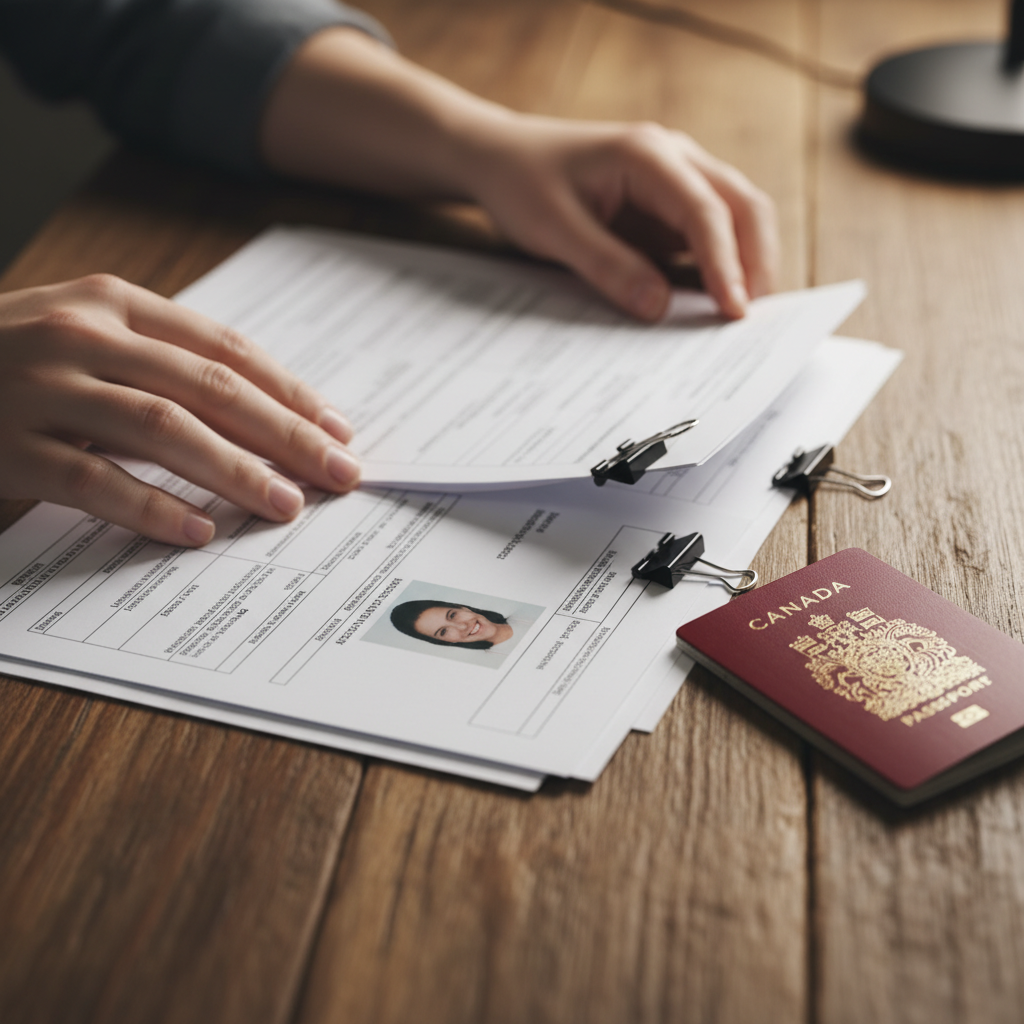
The permanent residence application timeline maps the steps from eligibility to decision: document prep, online submission, biometrics, medical exam, background checks, and finalization (eCOPR/visa and PR card). Each stage has its own wait window that varies by program, document quality, and IRCC workload.
- Core stages:
- Eligibility + points strategy: Confirm program fit (Express Entry, PNP, family class, protected persons).
- Document assembly: IDs, police certificates, employment letters, education, translations, proof of funds (when applicable).
- Application submission: Create/complete online forms, upload evidence, pay fees, receive AOR (acknowledgment of receipt).
- Biometrics + medicals: Provide fingerprints/photo and complete panel physician exam as directed.
- Background/eligibility review: IRCC checks work history, education, travel, and admissibility.
- Decision + landing: Passport request or eCOPR (if inland), then PR card issuance.
- Why order matters: Some tasks time out (police certificates/medicals). Planning avoids rework.
- Role of counsel: A lawyer ensures forms align with evidence and mitigates risk of return or refusal.
At Rathod Law Firm, we translate the sequence into a dated checklist so you always know what’s next and what could slow things down.
Why the PR Timeline Matters in 2026
A clear PR timeline helps you plan life events—job changes, leases, travel, and family moves—around predictable milestones. In 2026, draw sizes, category-based selections, and provincial nominations affect waits. Align your documents early to keep eligibility valid and reduce surprises.
- Life planning:
- Time leases and relocations to avoid mid-review disruptions.
- Coordinate international travel with biometrics/medical exam windows.
- Track family documents (marriage, birth, custody) for sponsorship impact.
- Status strategy:
- Consider bridging open work permits or maintained status when eligible to stay authorized while waiting.
- Mind study/work authorization end dates to avoid gaps.
- Compliance windows:
- Police certificate validity and medical exam expiry are frequent bottlenecks.
- Biometrics reuse rules may spare a repeat appointment if still valid.
- Appeal pathways:
- If refused, strict deadlines govern immigration appeals and judicial reviews. Fast action preserves your rights.
We’ve found that clients who calendar key expiry dates have fewer IRCC document requests and smoother outcomes.
How IRCC Processes Your Application
IRCC follows staged processing: completeness check, biometrics/medicals, background and eligibility review, then final decision. For Express Entry, the service standard commonly targets six months for 80% of complete files; spousal sponsorship often aims for about 12 months. Complexity can extend any stage.
- Completeness check (R10): Confirms forms, signatures, and mandatory evidence. Incomplete files risk return or delays.
- Biometrics: Scheduling at a VAC or Service Canada center; reuse may apply if given within 10 years for qualifying categories.
- Medical exam: Panel physician submits results; validity is often 12 months. Expiry can trigger re-exam requests.
- Background + security: Verifies work, education, addresses, travel, and admissibility; multi-country histories can lengthen review.
- Decision + eCOPR/visa: Inland cases often receive eCOPR; outland applicants complete passport/visa steps before landing.
What most people don’t realize: a single inconsistent date across forms and letters can pause review for weeks while IRCC seeks clarification.
Timelines by Pathway
Express Entry commonly targets six months post‑AOR for most complete files. Spousal/common‑law sponsorship often aims near 12 months. PNP processing varies by whether it’s Express Entry–aligned (usually faster) or base (often longer due to two‑stage review). Protected persons and H&C cases tend to take longer.
- Express Entry (FSW, FST, CEC):
- Target: about six months after AOR for 80% of complete cases.
- Variables: background complexity, travel/employment history, additional document requests.
- Tip: Keep employment reference letters precise (roles, dates, duties, and hours) to avoid eligibility questions.
- Provincial Nominee Program (PNP):
- Express Entry–aligned nominations may mirror six‑month federal targets.
- Base PNP often runs longer due to provincial stage plus federal stage sequencing.
- Tip: Keep nomination validity dates top of mind; don’t let a nomination expire mid‑process.
- Spousal/Common‑Law Sponsorship:
- Typical aim near 12 months; interview waivers and clean documentation help.
- Tip: Build a coherent relationship timeline with joint documents and travel evidence.
- Students transitioning to PR:
- CEC, PNP, or family class routes vary; ensure maintained status/work authorization while you wait.
- Tip: Line up transcripts, letters, and proof of authorized work early.
- Workers transitioning to PR:
- Work-to-PR plans rely on accurate NOC mapping and employer letters.
- Tip: Titles and duties must reflect the target NOC—don’t let HR templates undercut eligibility.
- Refugees/Protected Persons and H&C:
- Often longer due to evidentiary and security considerations.
- Tip: Maintain organized, date-labeled evidence to support credibility and continuity.

Process Overview Table
| Stage | What Happens | Typical Timing Notes | How to Stay on Track |
|---|---|---|---|
| Eligibility + Strategy | Confirm program fit and points; select pathway | Varies by profile and draws | Benchmark CRS, check PNP options, verify family class eligibility |
| Document Assembly | Gather IDs, work letters, police checks, translations | Document validity windows apply | Calendar expiries; notarize affidavits as required |
| Online Submission (AOR) | Complete forms, upload evidence, pay fees, receive AOR | Start of service-standard clock | Double-check names/dates; avoid common typos |
| Biometrics + Medicals | Book appointments; submit results | Reuse rules may apply; medicals valid ~12 months | Book early; keep receipts and confirmations |
| Background + Eligibility | IRCC verifies history and admissibility | Multi-country histories can extend review | Maintain a clean, consistent timeline |
| Decision + Landing | eCOPR/visa, PR card issuance | Final step; PR card arrives after landing | Monitor mail/address; keep IDs current |
Best Practices to Reduce Delays
Clean, complete, and consistent applications move faster. Use current IRCC checklists, certified translations, and valid police certificates. Cross‑check names and dates across every document. Respond to IRCC requests quickly through your secure account to maintain processing momentum.
- Document hygiene: Ensure your name, DOB, and addresses match across passports, forms, education, and employment letters.
- Police certificates: Obtain from all countries lived in for 6+ months since age 18; mind issuance and validity windows.
- Translations and declarations: Certified translations and notarized affidavits/statutory declarations when required.
- Proof of funds (when applicable): Provide recent statements and acceptable formats; avoid unexplained large deposits.
- Medicals timing: Book panel physician exams as instructed; monitor expiry to avoid re-exam delays.
- Biometrics: Check if prior biometrics remain valid to avoid unnecessary appointments.
- Secure account vigilance: Log in weekly to catch document requests and deadlines.
In our experience serving Brampton and the GTA, the fastest files use a single master timeline that tracks expiries, appointments, and uploads in one place.
Tools and Resources That Actually Help
Rely on official guides, service-standard dashboards, and your secure IRCC account. Use checklists to prevent omissions, and track expiries for medicals and police checks. When in doubt, a targeted consult can prevent weeks of back-and-forth requests.
- Program guides: Walk through eligibility, forms, and evidence expectations for Express Entry, PNP, and family class.
- Processing dashboards: Monitor typical waits by category to set expectations.
- Panel physician and biometrics portals: Find nearby appointments and book early, especially during winter peaks.
- Deep-dive primers: For background context, see a step-by-step PR overview such as this PR roadmap and a 2026-focused process explainer like this application process guide.
Rathod Law Firm also provides notarization for affidavits and statutory declarations, which can be critical for relationship or identity evidence.
Ontario-Focused Planning Tips
Use local logistics to your advantage. In Peel Region and the GTA, biometrics and medicals are accessible but book up quickly in peak seasons. Factor winter weather and holiday closures into courier and appointment timing to avoid last-minute rescheduling.
- Travel and access: Our Brampton office near Bovaird Drive East and Highway 410 makes quick document reviews and notarizations convenient.
- Seasonal timing: Winter storms and late‑December closures slow couriers and appointments—book two to three weeks ahead.
- Identity security: Transport originals in a locked folder; keep certified copies separated when possible.
- Appointment clustering: If feasible, schedule biometrics and medicals within the same week to tighten your timeline.
Real Examples from Our Brampton Practice
Organized files move faster. In our practice, Express Entry clients with precise job letters and consistent timelines often reach decisions within target ranges. Strong spousal evidence reduces IRCC follow‑ups. When refusals occur, timely appeals or judicial reviews keep options open.
- Skilled worker (CEC) case:
- Challenge: Multiple short-term contracts across two NOCs.
- Approach: Clarified main NOC with duty-matched letters and pay records; corrected minor date inconsistencies.
- Outcome: File advanced without additional document requests.
- Spousal sponsorship case:
- Challenge: Sparse early cohabitation documents.
- Approach: Built a month-by-month relationship timeline with travel proofs, photos, affidavits, and joint obligations.
- Outcome: No interview requested; timeline stayed near target.
- PNP nominee case:
- Challenge: Two-stage (province + federal) with nomination expiry risk.
- Approach: A shared calendar tracked all deadlines; we pre-collected federal-stage evidence.
- Outcome: Smooth handoff between stages with no lapses.
Need a second set of eyes?
Rathod Law Firm helps with eligibility strategy, document prep, notarization, and—if needed—immigration appeals and judicial reviews. Book a consultation to stress‑test your timeline and avoid preventable slowdowns.
FAQs: Permanent Residence Application Timeline
Most applicants ask how long PR takes, how to speed it up, and what causes delays. Below are concise answers we routinely share with clients in Brampton and across Ontario.
How long does Express Entry take in 2026?
Many complete Express Entry files aim for a six‑month service standard after AOR. Background complexity, multi‑country histories, security screening, or missing documents can extend that. Category‑based draws and program mix also influence overall throughput in a given year.
What slows PR timelines the most?
Inconsistent dates and names, expired police certificates or medicals, incomplete employment letters, and slow responses to IRCC requests. Frequent job changes and addresses without documentation can add verification time. Keeping a master timeline and document index reduces these risks.
Do I need new biometrics?
If you provided biometrics within the last 10 years for an eligible application, you may not need to give them again. Check your IRCC account for validity and instructions on whether a new appointment is required for your category.
Is spousal sponsorship still around 12 months?
Family class aims commonly hover near 12 months, but your facts matter. Clean relationship evidence, timely police checks, and consistent histories help reduce IRCC follow‑ups that can extend processing.
What if my application is refused?
Options may include an appeal in eligible categories or a judicial review at the Federal Court. Strict timelines apply. Contact counsel immediately to preserve your rights and explore the strongest next step.
Local Tips
- Tip 1: Driving via Highway 410? Exit at Bovaird Drive East—our office location makes notarizations and document hand‑offs efficient.
- Tip 2: In winter, book biometrics/medicals early—Ontario weather and holiday closures can disrupt appointments.
- Tip 3: For sponsorships, coordinate affidavits and statutory declarations through our notary services before your submission window.
IMPORTANT: These tips reflect local logistics and our immigration services designed to smooth PR timelines.
Conclusion and Next Steps
Map your route, control what you can, and prepare for variables. Choose the right program, file a complete application, and respond quickly to IRCC. If complications arise, experienced counsel can preserve options through immigration appeals or judicial review.
- Key takeaways:
- Pick the pathway that fits your facts; don’t force eligibility.
- Keep police checks and medicals valid; calendar expiries.
- Maintain a single master timeline for documents and milestones.
- Action steps:
- Schedule a consultation to validate your strategy.
- Assemble employment, education, and civil documents with certified translations.
- Pre-book biometrics and medicals to tighten your timeline.
- Support: Our Brampton team assists with immigration applications, sponsorships, appeals, judicial reviews, and notarization.
Key Takeaways
- The permanent residence application timeline depends on pathway, completeness, and background complexity.
- Express Entry often targets six months after AOR; spousal sponsorship is commonly near 12 months.
- Consistency and organized evidence reduce IRCC follow‑ups and delays.
- Local planning (appointments, weather, couriers) matters more than most applicants expect.